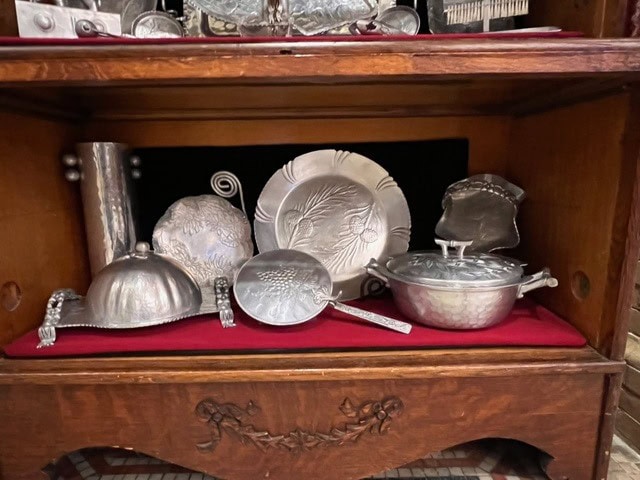
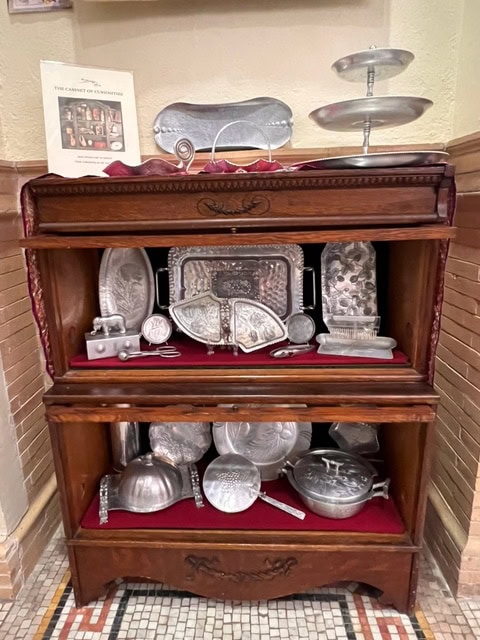
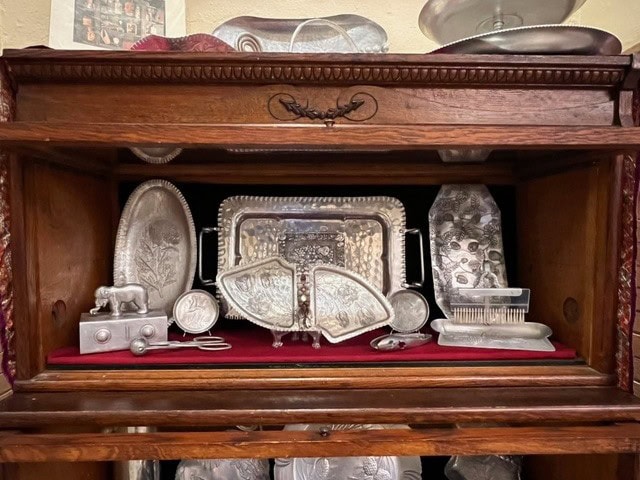
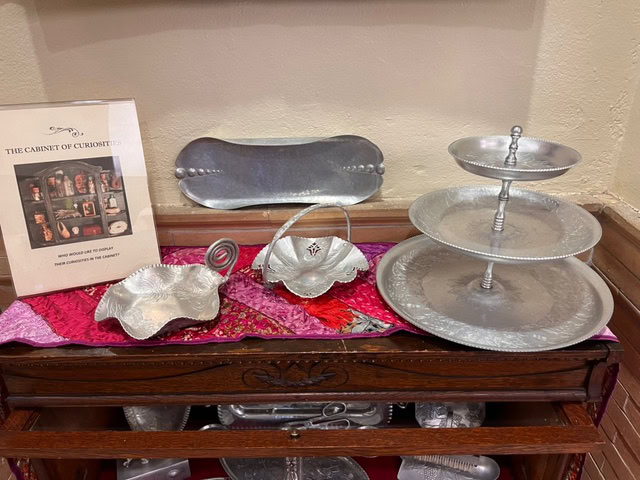
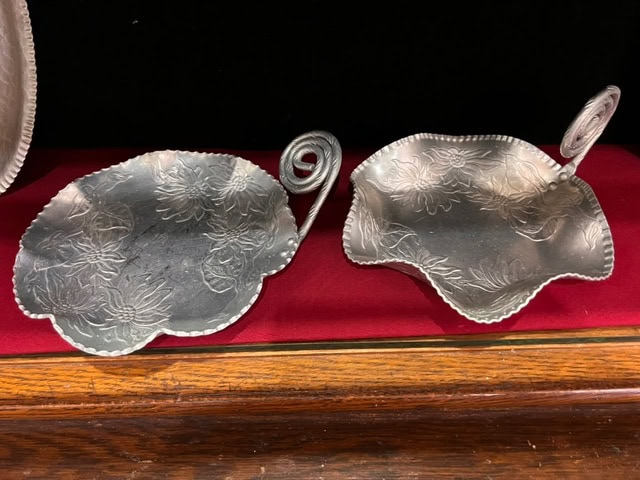
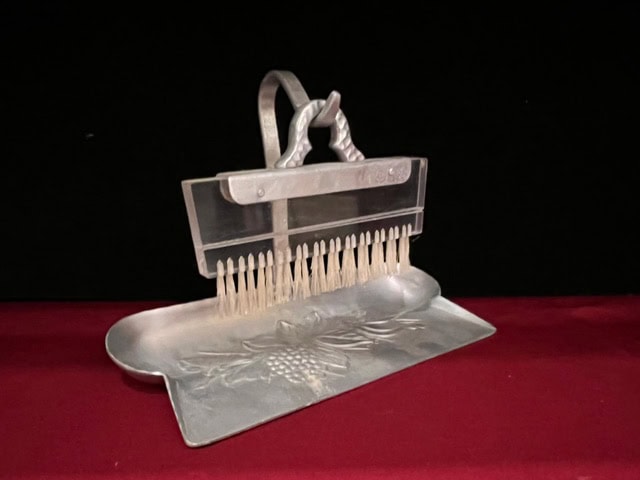
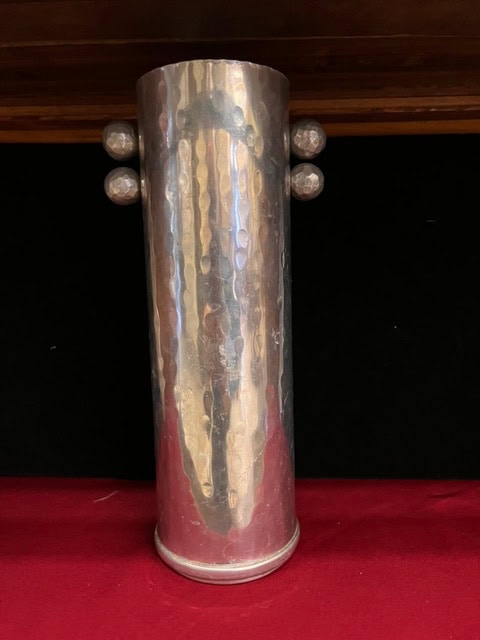
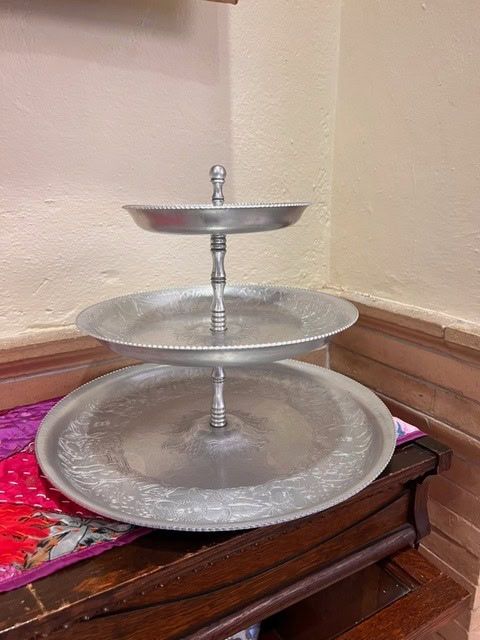
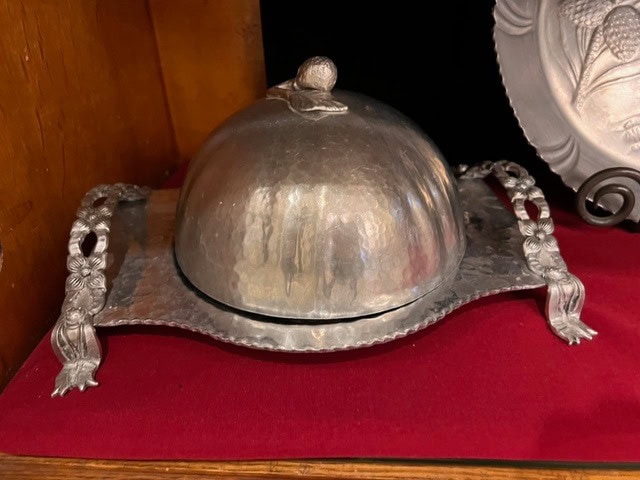
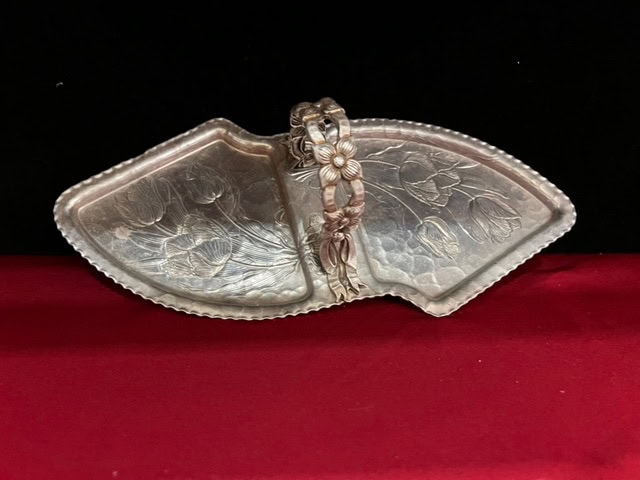
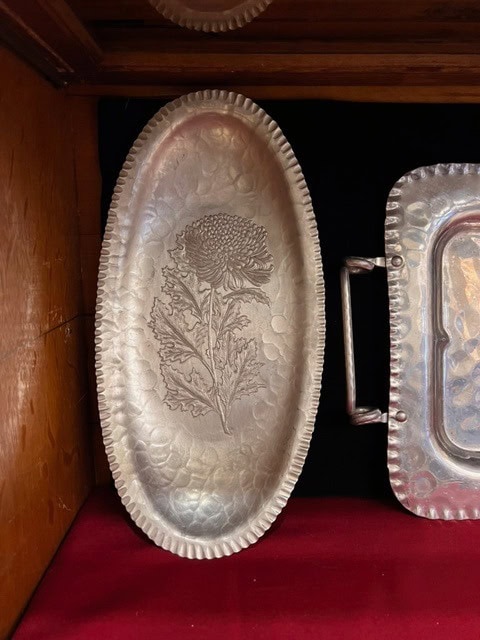
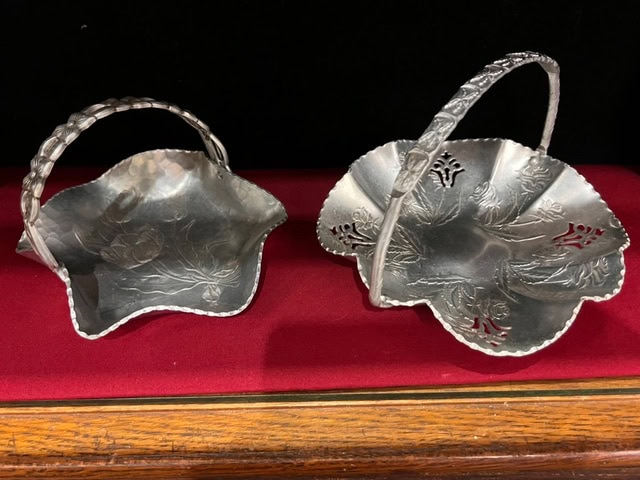
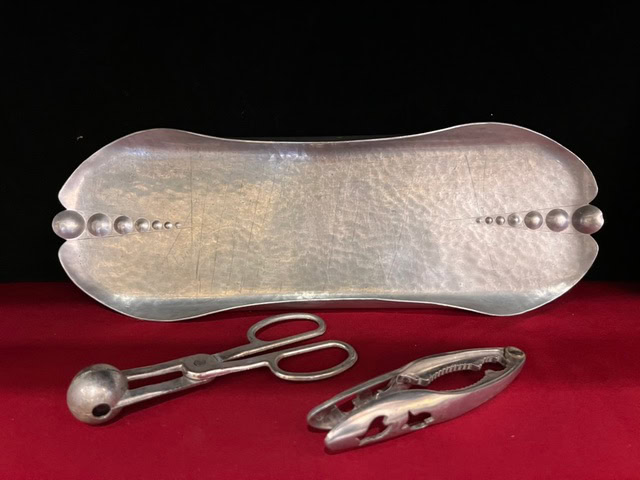
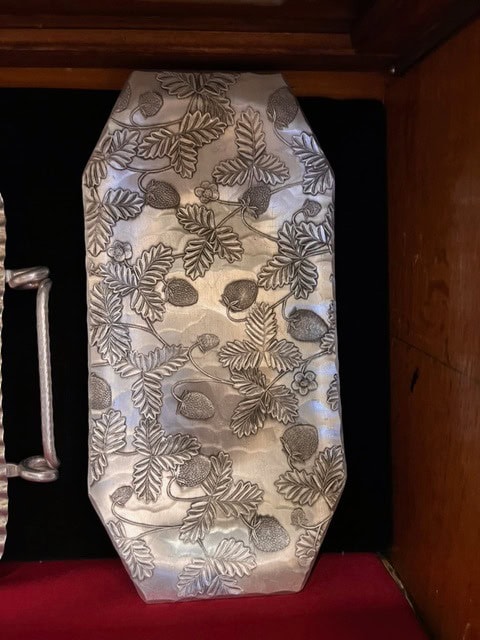
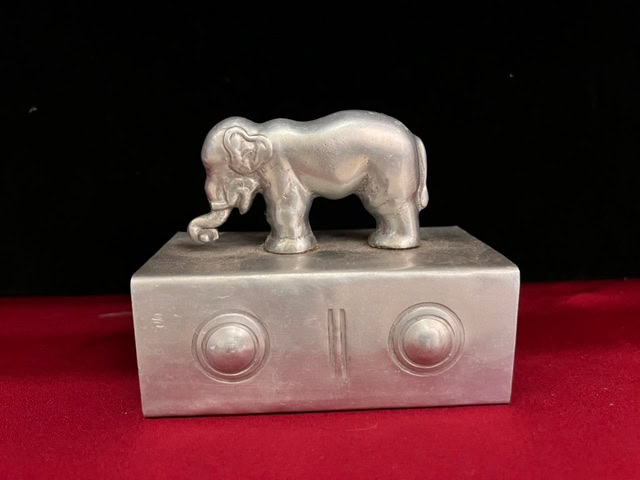
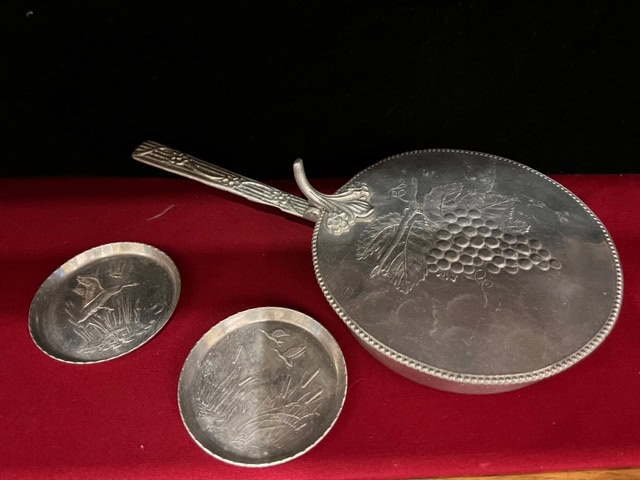
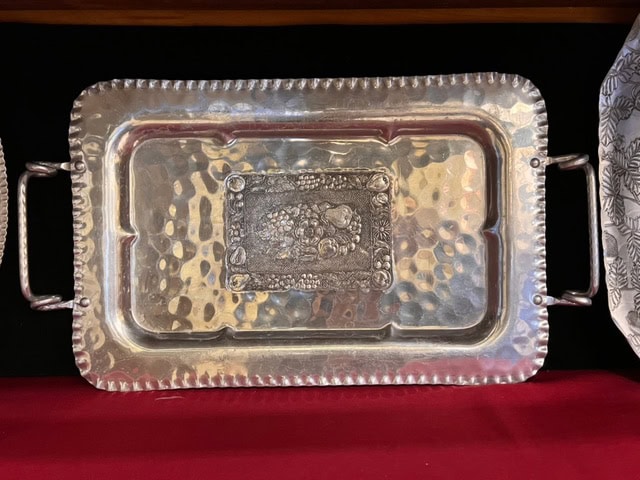
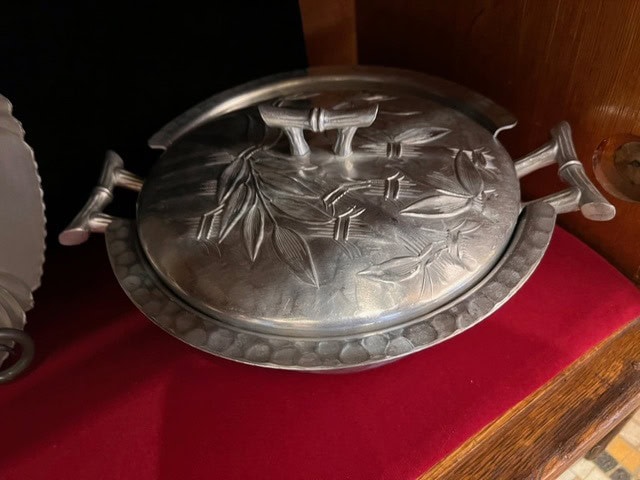
The Cabinet of Curiosities, under the Library’s historic rotunda, pings when you walk by. This April it is full of Meekins Archivist Daria’s quirky assortment of vintage aluminum pieces—in all shapes and sizes. Serendipitously gathered over the years from family, friends, church fairs, tag sales, the town dump, and “free-by-the-side-of-the-road” finds, Daria says coming across something new was just plain fun.
She writes: “It all started with my mother. She had all kinds of “hand-wrought” and simple utilitarian aluminum pieces—tumblers, small dishes, bowls, and more—and we used them. The brightly colored tall glasses were our childhood favorites for having homemade iced tea or lemonade out in the back yard. And of course they were unbreakable—a plus for active kids. But mostly I remember the trays—and although my mother is gone now, I have her favorite rectangular tray—I think it was a 1949 wedding present.
Aluminum practical household pieces and ornamental giftware were popular from about the 1920s through the 1950s. Known colloquially as the “poor man’s silver”, aluminum was cheaper to use than silver, durable, lightweight, and the items never needed polishing. It is also considered a “space age” material that is “built for flexibility, simplicity and speed.” Although the use of aluminum dates back to the 19th century, it was not until the 1920s when the Wendell August Forge (in Pennsylvania), which specialized in metal architectural details, made some decorative items for Alcoa Company staff. Thus, the craze started.
When the sheet of aluminum was cut, dies created beautiful designs that were hand-hammered—or hand-wrought—and shaped. Artists fashioned all kinds of patterns, with nature—leaves, flowers, plants, bamboo, fruit, vegetables—often providing the inspiration. Pieces were frequently marked with the name of the company, their hallmark, sometimes a number and the term “hand hammered” or “hand wrought”. As aluminum became popular, pieces were mass produced by machine.
It is their aesthetic appeal as “handmade” objects as well as their usefulness that made the pieces popular—plates, bowls, casserole and serving dishes, candy dishes, trays, coasters, ice buckets, tongs, vases, ash trays, crumb catchers—even tables, and more. Commonplace but beautiful objects. There were even aluminum purses! (Which are hard to find.).
Some of the best-known companies are Wendell August Forge, the early leader; Rodney Kent, created by Stanley Gelford, which often featured tulips; Continental, noted for its chrysanthemum motif; Hammercraft, noted for its serving dishes; Willson Specialties, which produced trays and bowls and serving pieces; Shup Laird, with designer Max Weil, and pieces with hammered finishes in the Art Deco style; Buenilum, featuring pieces that had a hammered finish and spiral knobs; and the prolific Everlast company, whose most successful line was the post WWII “Bali Bamboo” pieces decorated with bamboo shoots. This small assortment has examples from each of these companies—and a special addition. The unusual, decorated lobster claw cracker is from my colleague Beth’s family collection.
In many households, favorite aluminum pieces were brought out for everyday and special family meals, birthday celebrations, church pot-luck suppers—any and all events. As for my pieces and especially my mother’s tray—I still use it. Reminds me of home.”
This is not a “collector’s collection”. Rather is simply an assemblage of well-loved pieces that have been well-used over the years. Do you have a stash of decorative aluminum pieces that have been hiding in a closet? Do you have favorites that you use all the time? Is there one special piece in your home? Share photos and the stories of your favorite aluminum treasures with us. Daria D’Arienzo, Meekins Archivist. #throwbackthursday; #tbt.
Posted to Facebook 4/17/2025