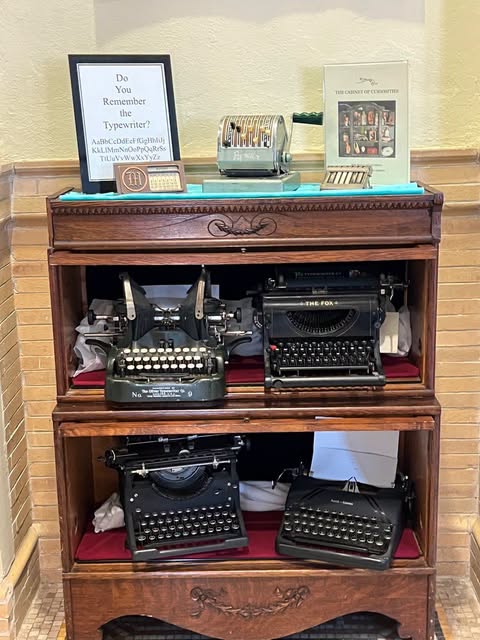
August is typewriter month at the Meekins Library. The Cabinet of Curiosities is chock full of typewriter samples from the Meekins and a patron’s own collection`. Revolutionary in its own way, the typewriter, originally a mechanical and then an electrical machine for typing out characters, changed the way and means of written work and more. The invention and design of the typewriter was incremental. Commercial manual typewriters were introduced in the 1870s, common in the 1880s, electrified in the 20th century, which transformed office work once again. Typewriters were indispensable in business, school, library, office, and other settings until the 1980s, when computers with word processing software replace the old-fashioned typewriter.
While there were some manufacturer differences, manual typewriter design became fairly standardized, with separate letter and number keys attached to a swinging typebar, striking an image made with a ribbon, on the paper rolled on the platen, with advancement by a strike bar. There were variations to be sure, especially for specific financial or language needs, but most operated the same way. With the 1961 introduction of the IBM Selectric typewriter with a rotating, tilting electric ball, things changed yet again.
Interestingly the QWERTY, or universal keyboard, from the 1870s, has survived the test of time and remains the same for English‑language computer keyboards today.
Typewriter manufacturer names remembered include E. Remington and Sons, IBM, Oliver Typewriter Company, Olivetti, Royal Typewriter Company, Smith Corona, Underwood Typewriter Company, Burroughs, Fox and many more.
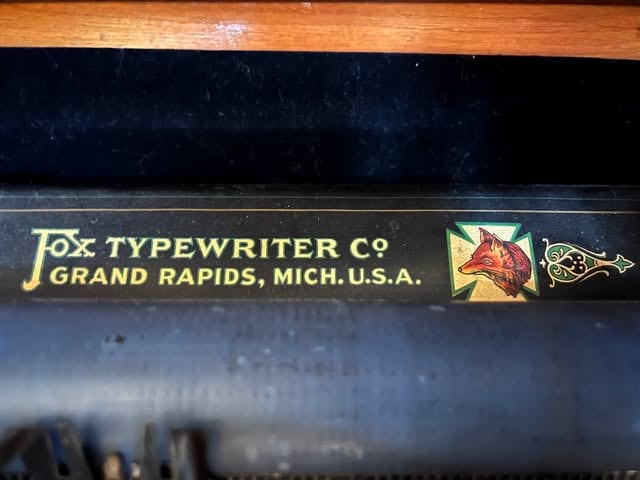
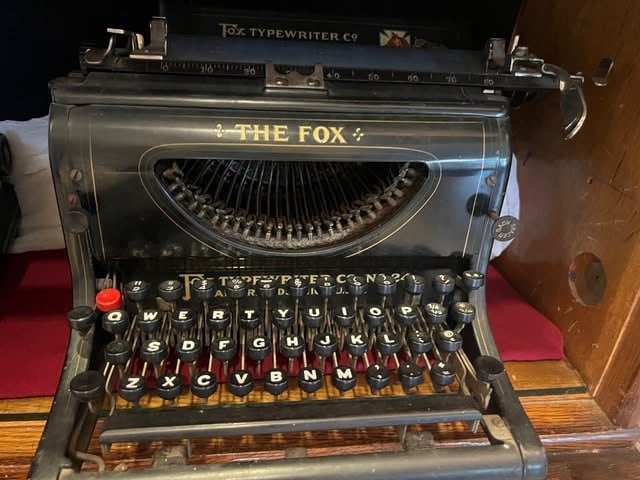
Leading off the display is Meekins’s own front-strike Fox Typewriter No. 24, c. 1906 from the Fox Typewriter Company of Grand Rapids, Michigan. Known for exceptional mechanical speed, an ultra-light touch, this beauty, adorned with a bright red fox, typed many early library catalogue cards.
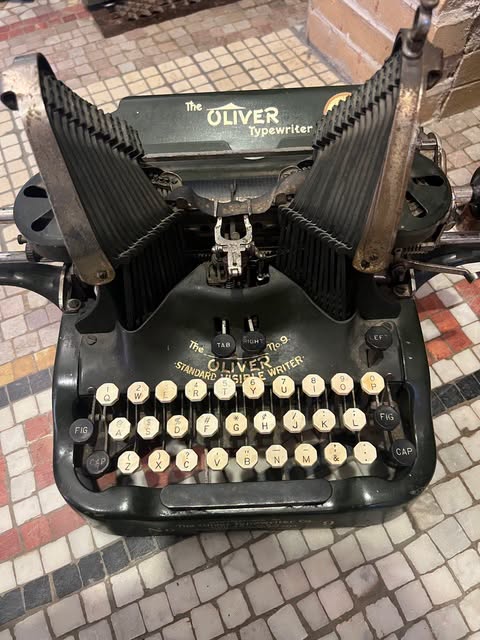
Next is the Oliver Typewriter No. 9 Standard Visible Writer, from The Oliver Typewriter Co, Chicago, Illinois, with maintenance directions: “Keep Machine cleaned and oiled” printed right on the front. A deep forest green machine, with U-shaped “batwing” typebars, it was produced between 1915 and 1922 and remains an icon among typewriters.
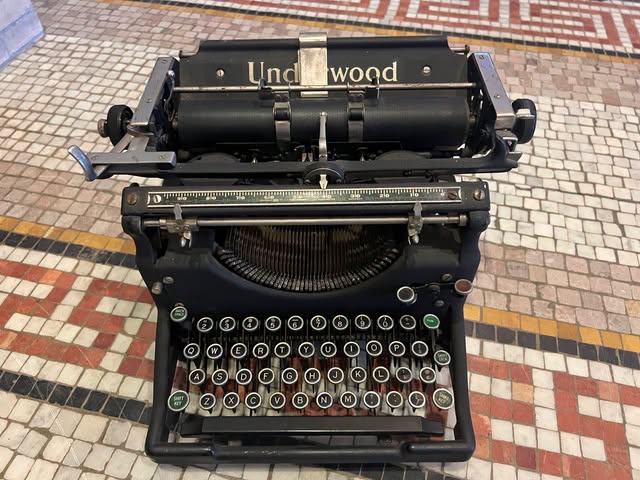
Then, the c. 1920s ubiquitous basic black Underwood No. 5 is the stereotype of a vintage typewriter—built at the Hartford factory of the Manhattan-based Underwood Typewriter Company, which could churn out one typewriter every minute! According to typewriter historians, this front platen striking machine was “the most successful typewriter design in history.”
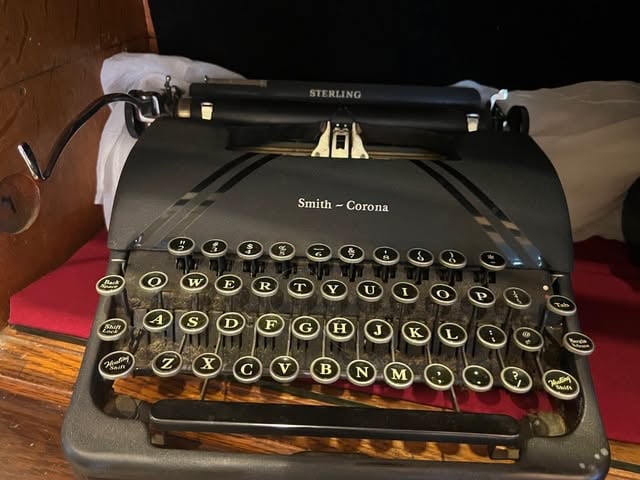
The small 1948 L. C. Smith & Corona Typewriters, Inc., Sterling portable floating shift typewriter, complete with case follows. With its black textured finish and glossy stripes, Bakelite keys and streamlined design, it is known for its Deco tuxedo style. Manufactured in Syracuse, New York, with its compact and lightweight models, the company introduced the first portable machines. Many writers, including Jack Kerouac and Agatha Christie, preferred Smith Coronas.
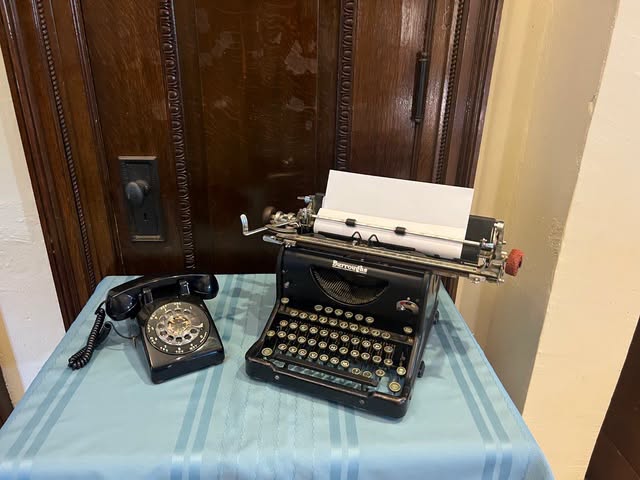
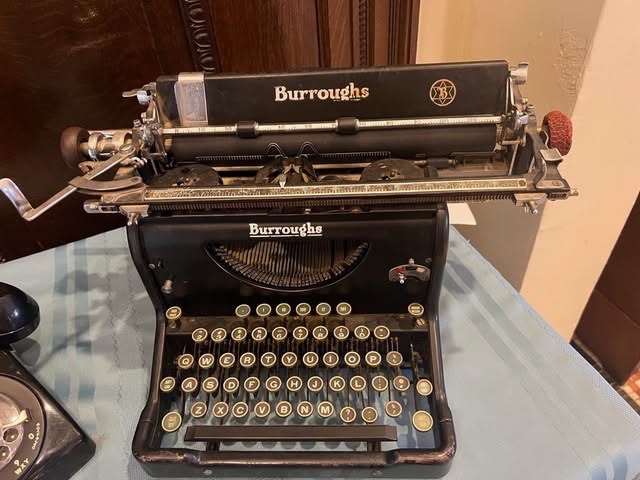
Finally, the unusual c. 1940 Burroughs typewriter, made specifically for financial transactions. Known for their accounting and billing machines, and late to the typewriter game (1931), Burroughs built extra-wide carriages (11 to 26 inches) and added billing adaptations for bookkeeping, banking, ledger, statistical and tabular office work rather than standard general correspondence, although they did have a standard typewriter. The Burroughs Corporation made typewriters in Detroit from 1931 to 1942, suspended production of commercial typewriters during WWII, used up their parts inventory from 1945 to 1946, and wrapped up the line.
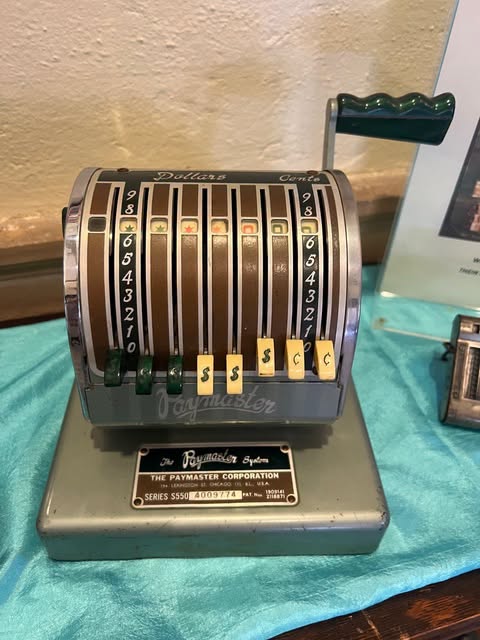
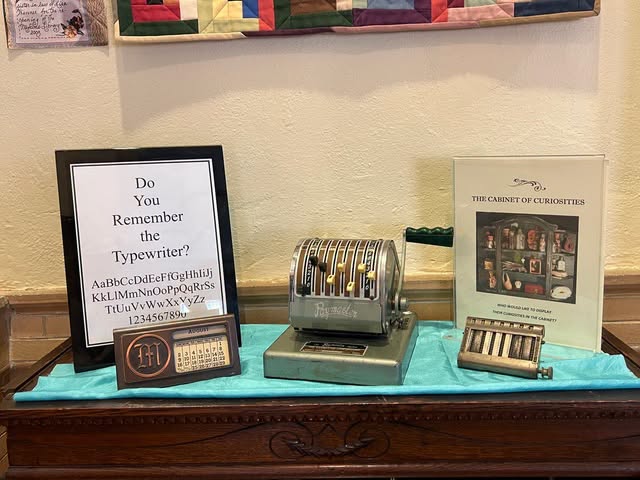
Come to the Meekins to see these vintage typewriters, one stray check embosser and a black Bakelite telephone. The library is open Tuesday 10-6; Wednesday 1-7; Thursday 3-6; and Saturday 9-2. Typewriters have a fascinating history; explore more here at The Classic Typerwriter. Daria D’Arienzo, Meekins Archivist and photographer. #throwbackthursday; #tbt.
Posted to Facebook 8/13/26