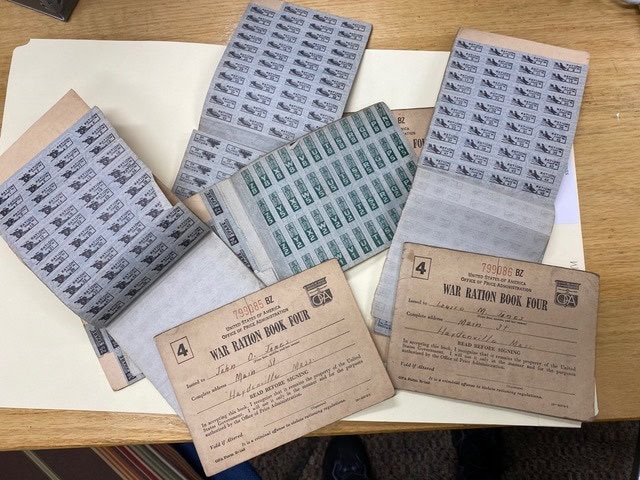
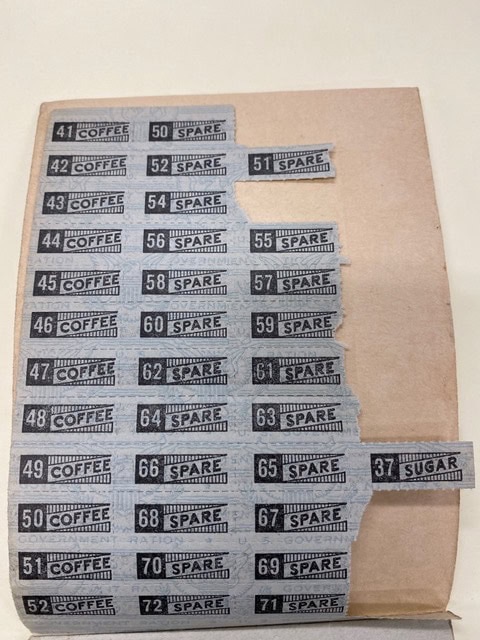
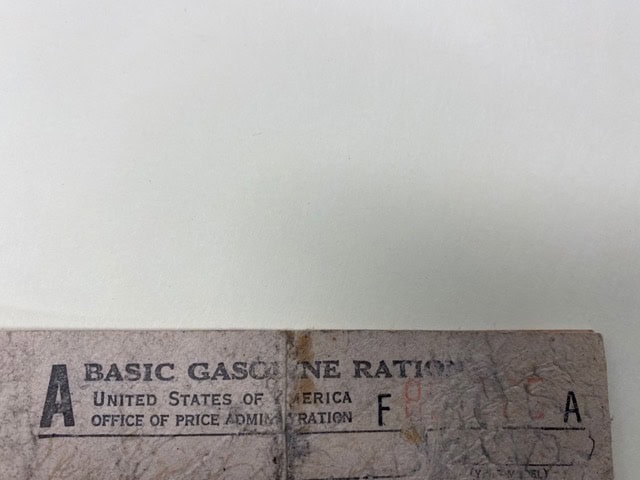
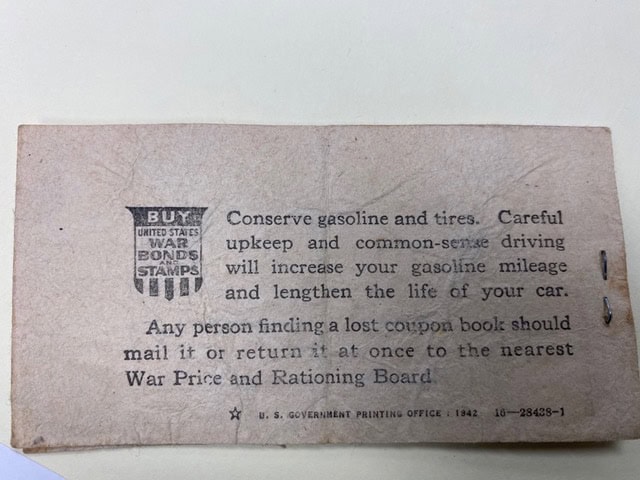
hen you ask what townsfolk remember about life in Williamsburg during World War II, shortages and rationing will likely be on their list. And what they will describe are the ration books given to each American family as shortages of food, metal, rubber, shoes, clothing, and gasoline became widespread. After the attack on Pearl Harbor on December 7, 1941, almost overnight the economy shifted to war time production. Consumer goods took a back seat. Shortages of food impacted everyone on a daily basis. By May 1942, war ration books and tokens were issues. So, when you went shopping the most important thing you took was not your money, it was your ration book. Those removable stamps insured that you would get your fair share of the small amounts of sugar or coffee or meat or anything else.
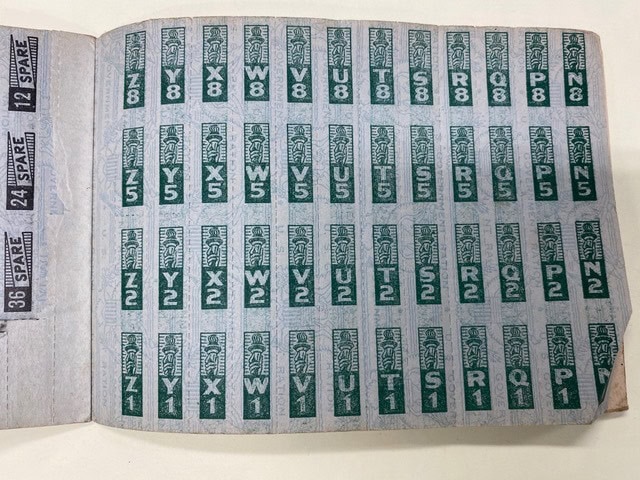
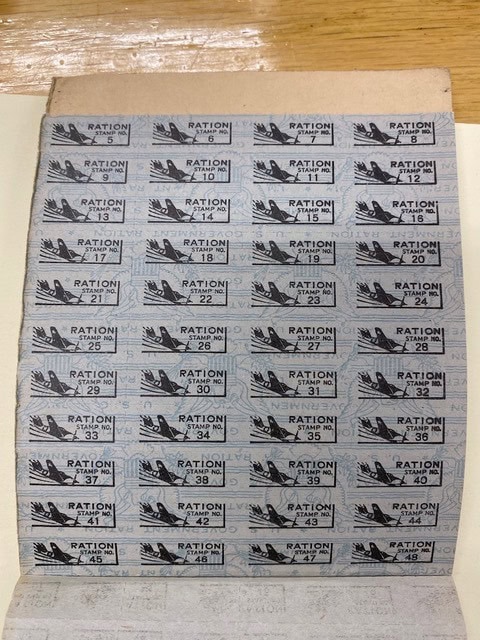
Illustrated with images of tanks and airplanes and Lady Liberty’s torch, the removable stamps were a precious commodity. Even special cookbooks were issued with revised recipes to help plan meals impacted by the shortages. After the war ended and rationing was no longer in effect, families saved their books, tucking them away, to just remember or to show their grandchildren. Recently these ration books from the Jones family found their way to the Meekins Library, where we will keep them safe. Do you or a family member have your own memories of rationing? Share them here.
Posted to Facebook 2/18/2021